



How Modern Fuel Injectors Drive Efficiency Across Gasoline, Diesel, and Gas Engines
Introduction
The modern internal combustion engine (ICE) is experiencing an unprecedented technological resurgence, largely driven by advancements in precise fuel delivery. At the heart of this transformation lies the fuel injector, a high-precision component responsible for spraying finely atomized fuel into the engine combustion chamber at exact microsecond intervals. As global automotive regulations demand cleaner air and higher fuel economy, the role of modern gasoline fuel injectors, heavy-duty diesel fuel injectors, and emerging natural gas injectors / gas fuel injectors has transitioned from mere fuel supply devices to critical drivers of powertrain efficiency.
To achieve maximum thermal efficiency and regulatory compliance, every modern fuel delivery system relies on four core performance pillars: precise fuel control, optimal atomization, high reliability, and lower emissions. By precisely metering the volume of liquid or gaseous fuel, high-performance injectors ensure complete stoichiometric or lean combustion, eliminating unburned hydrocarbons and significantly reducing greenhouse gas output. As Dr. Thomas Koch, Head of the Institute for Piston Machines at the Karlsruhe Institute of Technology (KIT), noted: "The fuel injector is no longer just a mechanical nozzle; it is the fundamental actuator that dictates the thermodynamic and environmental limits of the internal combustion engine."
The historical evolution of fuel delivery reflects a relentless search for thermal efficiency, progressing from early mechanical carbureted systems to single-point injection, progressing through multi-point and direct injection, and culminating in today’s multi-fuel electronic injection architectures. Legacy carbureted systems mixed air and fuel relying solely on vacuum pressure, lacking the agility needed to prevent fuel waste and erratic idling. The automotive industry subsequently transitioned to electronic injection architectures, eventually giving rise to high-pressure common rail and direct-injection frameworks. Today's multi-fuel electronic injection systems can effortlessly handle diverse fuel chemistries—ranging from high-viscosity diesel and highly volatile gasoline to alternative fuels such as Compressed Natural Gas (CNG), Liquefied Natural Gas (LNG), and Liquefied Petroleum Gas (LPG). This broad compatibility empowers global transport fleets, heavy machinery manufacturers, and marine power operators to achieve lower carbon footprints without compromising operational reliability.
Gasoline Fuel Injectors: Balancing Power Delivery and Emission Compliance
The relentless tightening of worldwide emission legislation—such as Euro 6d, China-6b, and US EPA Tier 3 standards—has reshaped the development of gasoline fuel injectors. To reconcile the competing demands of high power output, lower fuel consumption, and strict tailpipe emission caps, automotive engineers have shifted from legacy low-pressure single-point injection (SPI) to port fuel injection (PFI) and high-pressure gasoline direct injection (GDI) systems. Direct injection allows fuel to be sprayed at pressures exceeding 350 bar straight into the combustion cylinder, generating a localized cooling effect that increases air charge density and permits higher engine compression ratios without destructive knocking.
Among modern GDI architectures, multi-hole fuel injectors play an irreplaceable role in optimizing in-cylinder spray patterns. By deploying micro-drilled laser orifices angled at exact trajectories, these multi-hole nozzles break liquid gasoline into microscopic droplets, significantly accelerating fuel-air evaporation and preventing wet fuel films from depositing onto cylinder walls. This rapid evaporation eliminates localized rich-burn zones, drastically reducing raw particulate matter (PM) and unburned hydrocarbon emissions to meet strict regulatory limits. As Dr. Rolf Bulander, former Chairman of Mobility Solutions at Robert Bosch GmbH, emphasized: "Direct gasoline injection combined with precise multi-hole spray formation represents one of the most effective mechanical contributions toward clean gasoline combustion."
For cost-sensitive passenger cars, light commercial fleets, and two-wheeler markets, electromagnetic fuel injectors remain the industry standard for reliable pulse regulation. Utilizing a robust solenoid coil and return spring mechanism, an electromagnetic fuel injector opens and closes in response to precise pulse-width modulation signals from the engine control unit (ECU). These solenoids offer high operational durability, consistent thermal performance, and low manufacturing overhead, making them ideal for high-volume automotive manufacturing.
At the top end of modern performance engineering are high-speed piezoelectric fuel injectors and specialized pintle fuel injectors. Piezoelectric actuators leverage multi-layer ceramic crystal stacks that expand in microseconds when energized, enabling up to five ultra-precise micro-injections per combustion stroke for superior throttle response and acoustic refinement. Meanwhile, durable pintle fuel injectors feature an integrated self-cleaning pin design inside the orifice. This mechanical movement continuously cleans away carbon deposits, making pintle units an exceptionally reliable choice for legacy passenger vehicles, small general power equipment, and portable generators operating under varying fuel quality conditions.
Diesel Fuel Injectors: Overcoming Extreme High-Pressure Combustion Resistance
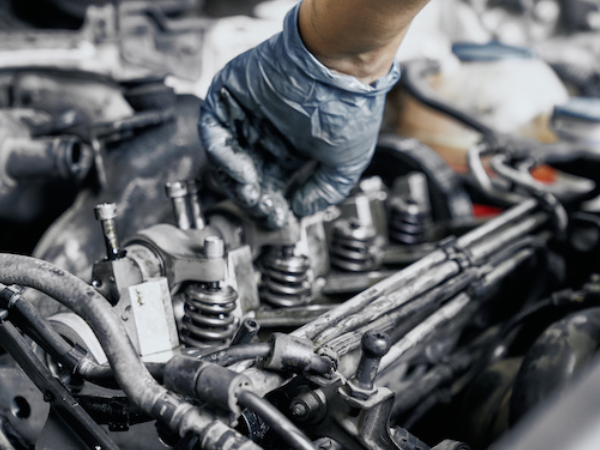
Compression-ignition diesel powertrains operate under some of the most grueling thermodynamic conditions in modern engineering. Unlike spark-ignited engines, heavy-duty diesel engines rely on extreme compression ratios to auto-ignite fuel injected directly into dense, highly compressed cylinder air. To overcome this massive cylinder air resistance, modern diesel fuel injectors must operate at common rail pressures reaching 2,500 to 3,000 bar. Under these extreme pressures, the injector must achieve deep spray penetration and fine force atomization, ensuring that liquid fuel breaks down into microscopic mist that rapidly mixes with oxygen for complete combustion.
In commercial haulage and industrial machinery, solenoid / electromagnetic diesel injectors serve as the heavy-duty backbone of power delivery. Built with high-strength alloy housings and heavy-duty solenoid coils, these actuators are specifically engineered to withstand severe off-highway shock, continuous thermal cycles, and aggressive engine vibration. They deliver exceptional mechanical endurance in demanding working environments while maintaining precise fuel metering over hundreds of thousands of duty hours. As Dr. Hubertus Ulmer, Senior Diesel Systems Specialist at Continental Powertrain, noted: "The mechanical resilience of common rail diesel injectors under ultra-high pressure is what enables heavy commercial transport to achieve both high torque density and long-term durability."
For ultra-clean commercial applications and light-to-medium-duty transport, piezoelectric diesel injectors represent the cutting edge of common rail technology. By utilizing piezoelectric crystal stacks that expand near-instantly when energized, these injectors achieve microsecond-level response times that are significantly faster than traditional solenoids. This ultra-fast actuation enables up to seven independent micro-injection pulses per combustion cycle—including pilot, main, and post-injections. By carefully pre-conditioning the combustion chamber temperature with pilot injections, piezoelectric systems drastically reduce peak combustion noise and suppress nitrogen oxide ($\text{NO}_x$) formation without sacrificing fuel efficiency.
The real-world versatility of advanced diesel fuel injectors spans critical global transport and industrial sectors:
- Long-Haul Freight & Heavy Commercial Trucks: Sustains high engine torque and optimizes fuel economy across highway logistics routes.
- Construction & Mining Machinery: Powers heavy excavators, wheel loaders, and mining haulers under high dust and shock conditions.
- Agricultural Machinery: Drives high-horsepower tractors and combine harvesters operating continuously under heavy seasonal workloads.
- Marine Power & Stationary Generators: Provides continuous, high-load power generation for ocean transport vessels and off-grid industrial power stations.
Natural Gas Fuel Injectors: High-Pressure CNG Systems
The global transition toward clean-energy transport has established Compressed Natural Gas (CNG) as a crucial alternative fuel for internal combustion engines. Operating on spark-ignition principles, natural gas engines require specialized natural gas injectors / gas fuel injectors that can deliver precise gas metering directly into the intake airflow or combustion chamber. Unlike liquid fuels that rely on droplet atomization, CNG injectors handle fuel already in a gaseous state, making accurate volume metering and rapid injection response essential for achieving smooth air-fuel stoichiometry.
Engineering resilience is paramount when designing CNG injectors, as they must safely regulate systems operating under working storage pressures up to 200 bar. To handle these extreme pressure gradients without gas leakage, these gaseous fuel injectors are constructed with high-grade stainless steel valve needles, anti-corrosive internal alloys, and specialized synthetic seals resistant to chemical degradation. The internal valve geometry is precisely calibrated to prevent pressure drop variations from disrupting gas flow consistency across all engine speed ranges.
In high-mileage urban commercial transport, precision flow accuracy directly impacts operating expenses and driver drivability:
- Urban Taxi Fleets: High-frequency pulse responsiveness optimizes throttle response during constant stop-and-go driving, maximizing fuel efficiency and reducing operational costs.
- Public Transit City Buses: Smooth micro-pulse gas dosing eliminates engine hesitation under heavy passenger loads, keeping transit fleets compliant with strict municipal zero-smoke emission standards.
For industrial energy applications, CNG injectors are heavily utilized in distributed natural gas power generator sets and co-generation units. Operating under continuous non-stop duty cycles, these industrial natural gas fuel injectors provide stable gas supply to maintain precise electrical voltage and frequency regulation. As Dr. Christopher Brinkmann, Chief Engineer for Gas Engine Research at DEUTZ AG, stated: "Injecting gaseous fuels at high pressures requires an entirely different mechanical discipline—flow precision and seat leakage control are the absolute keys to unlocking gas engine thermal efficiency."
Natural Gas Fuel Injectors: Vaporized LNG for Commercial Logistics
Liquefied Natural Gas (LNG) has emerged as the premier clean-energy alternative for heavy-duty, long-haul freight transport due to its high volumetric energy density. Stored in cryogenic tanks at temperatures as low as -162℃, LNG undergoes heat exchange and gasification through vaporizers before being delivered to the intake system. Consequently, specialized LNG injectors are engineered to operate on vaporized gas, delivering precise gaseous mass flow into the engine cylinders to generate the high engine torque required for heavy freight transport.
Managing vaporized LNG requires advanced thermal management within the injection valve architecture. Because the temperature of re-vaporized gas can fluctuate depending on ambient conditions and engine load, LNG injectors feature specialized thermal-insulating coatings, fluorine-based elastomeric seals, and non-friction internal coatings. These components prevent thermal stress, eliminate needle binding caused by rapid temperature shifts, and ensure zero gas leakage across extended operational lifespans.
For long-haul commercial trucks and highway freight tractors, high-flow vaporized gas delivery is essential to maintain acceleration and uphill pulling power. Advanced LNG injectors feature wide dynamic flow ranges that instantly deliver large volumes of gas during full-load conditions without dropping fuel rail pressure. This responsive metering ensures that natural gas engines achieve high torque curves comparable to traditional diesel powertrains while maintaining low operational noise and smooth throttle response. As Martin Lundstedt, CEO of the Volvo Group, remarked: "Liquefied natural gas represents a vital bridging technology for heavy commercial transport, allowing logistics fleets to achieve immediate carbon reductions without compromising freight capacity or long-distance range."
LPG Gas Fuel Injectors: Liquid Line Delivery and Manifold Vaporization
Liquefied Petroleum Gas (LPG)—consisting predominantly of propane and butane mixtures—offers distinct thermodynamic advantages for internal combustion engines when managed by specialized fuel injection systems. Unlike gaseous-phase natural gas systems, LPG gas fuel injectors receive fuel in a pressurized liquid state straight from the supply line. The injector meters this liquid LPG directly into the intake manifold, where the liquid instantly vaporizes upon entering the lower-pressure manifold environment.
This instant phase change from liquid to gas triggers a rapid heat-absorption reaction within the intake runner. As the vaporizing LPG absorbs ambient heat, it significantly cools the incoming charge air, increasing charge air density and boosting the engine's volumetric efficiency. This cooling effect allows LPG-powered engines to produce higher power output, prevent engine knocking, and achieve superior fuel economy during high-load conditions.
The environmental and mechanical performance of LPG gas fuel injectors translates into key operational advantages across specific industries:
Indoor Warehouse Forklifts: Complete, clean combustion achieves zero exhaust pollution and eliminates toxic carbon monoxide fumes, making LPG forklifts safe for indoor material handling and enclosed logistics operations.
Urban Taxi Fleets & Passenger Cars: Rapid manifold gasification ensures smooth idling, responsive acceleration, and exceptional cost savings per kilometer for commercial urban drivers.
Household Standby Generators: Superior fuel stability prevents injector gumming or needle sticking during long standby periods, ensuring instant cold-start reliability during emergency power outages.
As Dr. James Turner, Professor of Engines and Energy Systems at King Abdullah University of Science and Technology (KAUST), observed: "The latent heat of vaporization in liquid-metered LPG injection acts as a natural intercooler inside the intake manifold, unlocking both thermal efficiency and ultra-clean combustion performance."
Purchasing and Engineering Guide: Selecting the Right Fuel Injectors
Selecting the optimal fuel injection system requires a comprehensive evaluation of engine architecture, operating conditions, and fuel dynamics. Whether sourcing gasoline fuel injectors, heavy-duty diesel fuel injectors, or specialized natural gas injectors / gas fuel injectors, procurement managers and automotive engineers must analyze three core technical parameters:
Pressure Tolerance: Matching the structural integrity of the injector body to system pressures—ranging from low-pressure port injection (3–6 bar) to extreme common rail diesel (up to 3,000 bar) and high-pressure CNG systems (200 bar).
- Dynamic Flow Rate: Ensuring precise mass flow delivery across the entire engine operating map, from micro-dose idling to full-throttle maximum output.
- Actuation Speed: Choosing between standard solenoid response times (milliseconds) and high-speed piezoelectric crystal stacks (microseconds) based on multi-pulse injection requirements.
To maximize performance and fleet ROI, injection hardware must be strictly matched with its targeted application:
- Passenger Cars & Light Vehicles: Prioritize high-atomization multi-hole fuel injectors or piezoelectric gasoline/diesel units to ensure quiet operation, responsive acceleration, and strict emission compliance.
- Commercial Transport & Off-Highway Machinery: Choose robust solenoid / electromagnetic diesel injectors engineered for heavy shock resistance, long thermal lifespans, and high continuous torque delivery.
- Clean-Energy Fleets & Stationary Power: Deploy dedicated CNG, LNG, or LPG gas fuel injectors equipped with specialized thermal insulation and chemical-resistant synthetic seals for gasification reliability.
Before installation, high-quality injectors must undergo rigorous quality assurance protocols. ISO-certified manufacturing facilities utilize dynamic bench testing to verify spray angle geometry, high-pressure helium leakage checks to eliminate gas/liquid escaping, and automated electronic flow calibration to guarantee identical flow matching across all cylinders.
To avoid premature injector failure and prevent clogging or engine power loss, maintenance teams should follow a systematic preventive maintenance protocol. This begins with regular fuel filter replacement to capture contaminants before they enter the high-pressure fuel rail. Teams should then conduct periodic system pressure and leakage verification to catch seal degradation early, followed by diagnostic ECU fault code scanning to monitor real-time pulse width variations. Finally, performing scheduled ultrasonic cleaning and flow bench recalibration restores original spray patterns and guarantees uniform cylinder balance over hundreds of thousands of operating miles.
As Dr. David Mercer, Principal Powertrain Consultant at Global Automotive Engineering, emphasized: "Selecting an injector is not simply about physical fitment; it is about matching dynamic flow curves, thermal resilience, and fuel chemistry to guarantee long-term system reliability."
Conclusion
The rapid advancement of fuel injection technology continues to drive thermal efficiency, superior power output, and stringent emission compliance across gasoline, diesel, and alternative gaseous fuels. Modern gasoline fuel injectors leverage multi-hole atomization and piezoelectric speed to suppress particulate emissions, heavy-duty diesel fuel injectors utilize ultra-high-pressure common rail systems to power global logistics, and specialized natural gas injectors / gas fuel injectors—including CNG, LNG, and LPG gas fuel injectors—provide clean, high-torque energy solutions for sustainable transport. By mastering precise fuel control, optimal atomization, and high reliability, these advanced components remain indispensable in reducing carbon footprints and lowering operational costs across all internal combustion engine platforms.
Looking ahead, the future of fuel injection lies in smart closed-loop sensing, ultra-precise micro-dosing, and seamless adaptation to carbon-neutral e-fuels and hydrogen combustion architectures. As international environmental mandates tighten, selecting precision-engineered injection hardware will remain the single most effective strategy for optimizing engine performance. Fleet operators, procurement managers, and automotive engineers must continue partnering with certified, high-precision component manufacturers to ensure their powertrains achieve maximum efficiency, long-term durability, and full regulatory compliance in next-generation transport ecosystems.
FAQs
Q1: What is the main difference between gasoline, diesel, and gas fuel injectors?
Gasoline injectors operate at low-to-medium pressures (3 to 350+ bar) to mix highly volatile liquid fuel with air via multi-hole or port spray nozzles. Diesel injectors operate under extreme compression pressures (up to 3,000 bar) to forcefully atomize high-viscosity diesel through dense cylinder air. Natural gas (CNG/LNG) and LPG injectors are specially sealed and thermally regulated to meter gaseous or rapidly vaporizing liquid-gas fuels, ensuring precise volumetric control without leaking or carbon fouling.
Q2: Why are multi-hole fuel injectors preferred for modern gasoline engines?
Multi-hole fuel injectors feature precisely angled, laser-drilled orifices that break liquid gasoline into microscopic droplets. This maximizes fuel-air evaporation, prevents wet fuel deposits on cylinder walls, eliminates localized rich-burn zones, and drastically reduces unburned hydrocarbon and particulate matter (PM) emissions to meet strict standards like China-6b and Euro 6.
Q3: How do solenoid and piezoelectric diesel injectors compare in heavy-duty applications?
Solenoid diesel injectors use robust electromagnetic coils built for high mechanical strength, vibration resistance, and long-term durability in heavy construction, mining, and long-haul transport. Piezoelectric injectors use ultra-fast ceramic crystals that expand in microseconds, enabling up to seven micro-injections per combustion cycle. This provides precise timing control that reduces engine noise and suppresses nitrogen oxide ($\text{NO}_x$) emissions in high-efficiency common rail systems.
Q4: Can standard gasoline or diesel injectors be used for CNG, LNG, or LPG fuels?
No. Gaseous fuels like CNG, LNG, and LPG require dedicated gas injectors with specialized internal metallurgy, anti-corrosive coatings, and chemical-resistant synthetic seals (such as fluorine elastomeric seals). Standard liquid injectors lack the thermal management and seat-sealing required to prevent high-pressure gas leaks, dry friction wear, and needle binding.
Q5: What maintenance practices prevent fuel injector clogging and engine power loss?
To prevent premature injector failure and power loss, operators should replace fuel filters at recommended service intervals, perform regular ECU diagnostic scans for pulse-width anomalies, inspect rail pressures and seals for leakage, and periodically perform ultrasonic cleaning and flow-bench recalibration to restore original spray patterns and balance fuel delivery across all cylinders.



Company: Shandong Topkit Construction Machinery Equipment Co., Ltd.
Phone: +86 152 6392 0563
WhatsApp: +86 152 6392 0563
Email: [email protected]
Address: 1-1-401, Hailiang Mansion, Liuhang Street, High-tech Zone, Jining City, Shandong Province, China